The Physics of Failure: Why Connections Melt
High-voltage appliances consume a massive amount of electricity. According to Joule’s Law, the heat produced in a conductor is proportional to the resistance: P = I^2 R.
Any imperfection in the connection increases resistance (R). Even a tiny increase in resistance at high current (I) creates intense heat, leading to what we call “thermal runaway”.
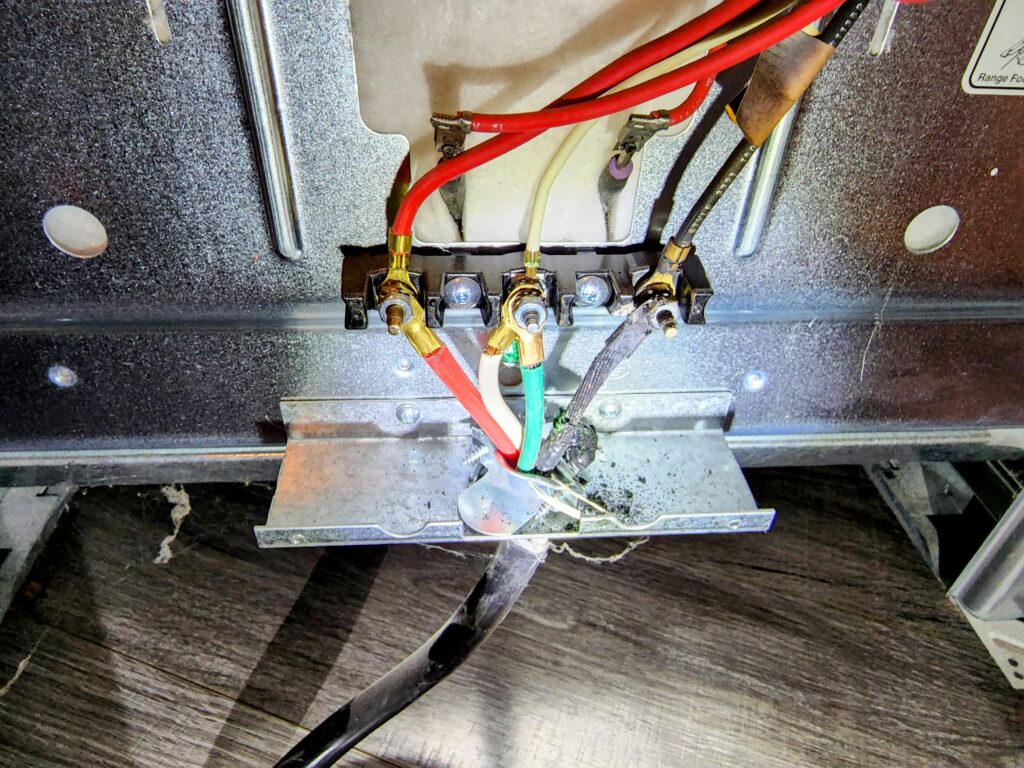
❌ 1. Cross-Threaded or Misaligned Screws
This is the most dangerous issue because it’s often invisible.
- The Mistake: The screw doesn’t engage the threads properly. It feels “tight” to the installer, but it hasn’t actually clamped the wire lug down.
- The Result: The connection remains loose. This creates a high-resistance gap where electricity struggles to pass, leading to oxidation and eventually a melted terminal block.
❌ 2. Improper Lug Positioning (The “Flat Contact” Rule)
The metal connector (lug) at the end of the power cord must sit perfectly flat against the terminal surface to maximize the contact area.
- The Mistake: We often find lugs installed at an angle or catching on the plastic edge of the terminal housing.
- The Result: The actual contact area is drastically reduced. Under heavy loads, like a preheating oven, heat builds up instantly, destroying the terminal’s integrity.
❌ 3. Under-Tightened Connections
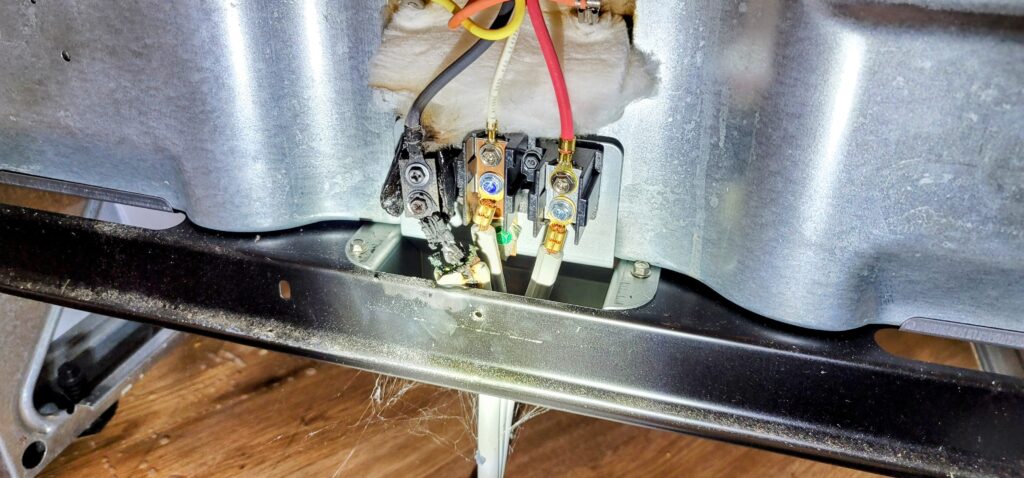
Many installers tighten screws by hand without applying necessary torque or verifying the connection.
- The Mistake: Relying on a “snug” feel rather than a secure, mechanical bond.
- The Result: Over time, the natural vibration of the appliance and thermal expansion/contraction cause the screw to back out. This leads to arcing—where electricity “jumps” across the gap—causing burnt insulation and total failure.
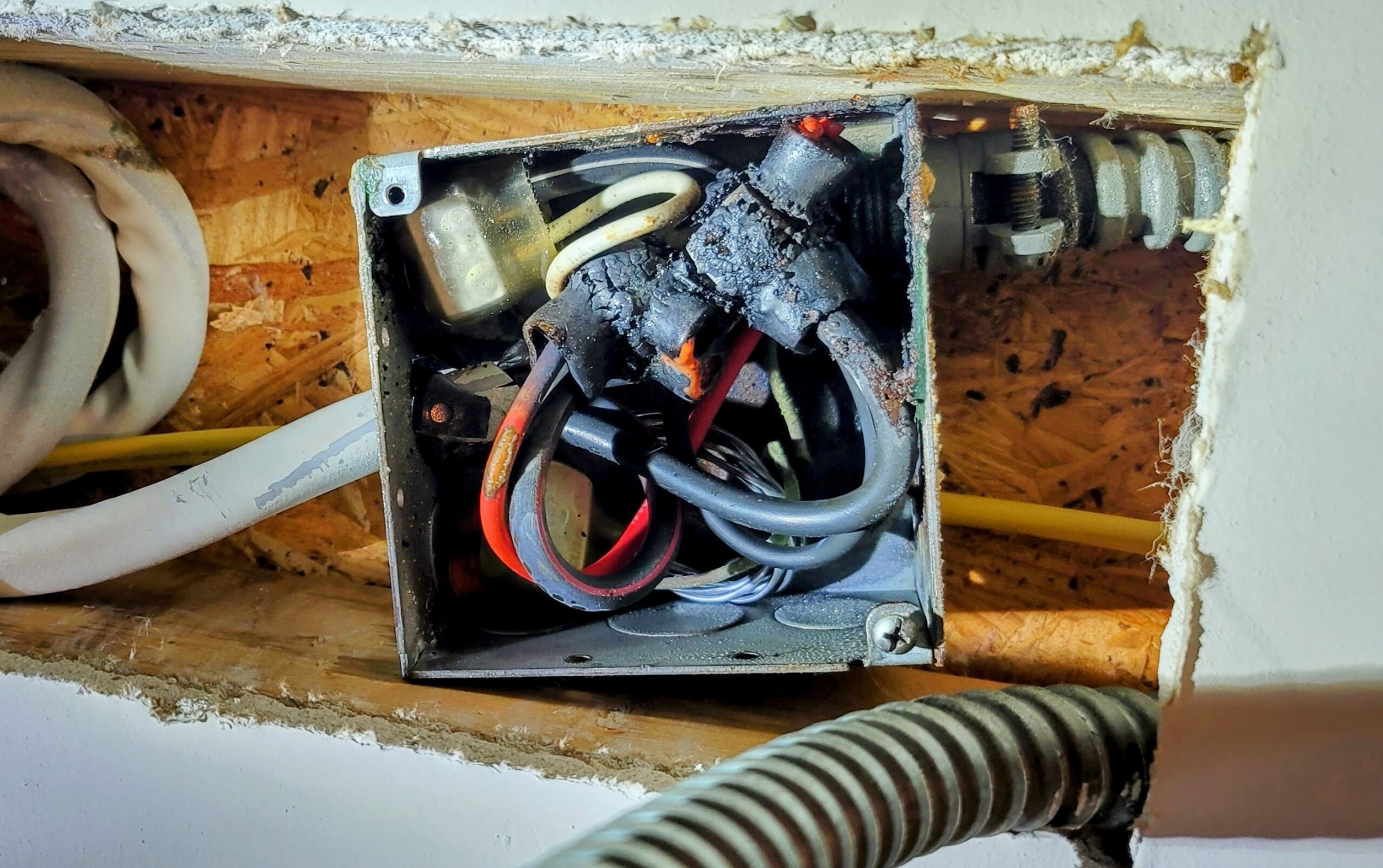
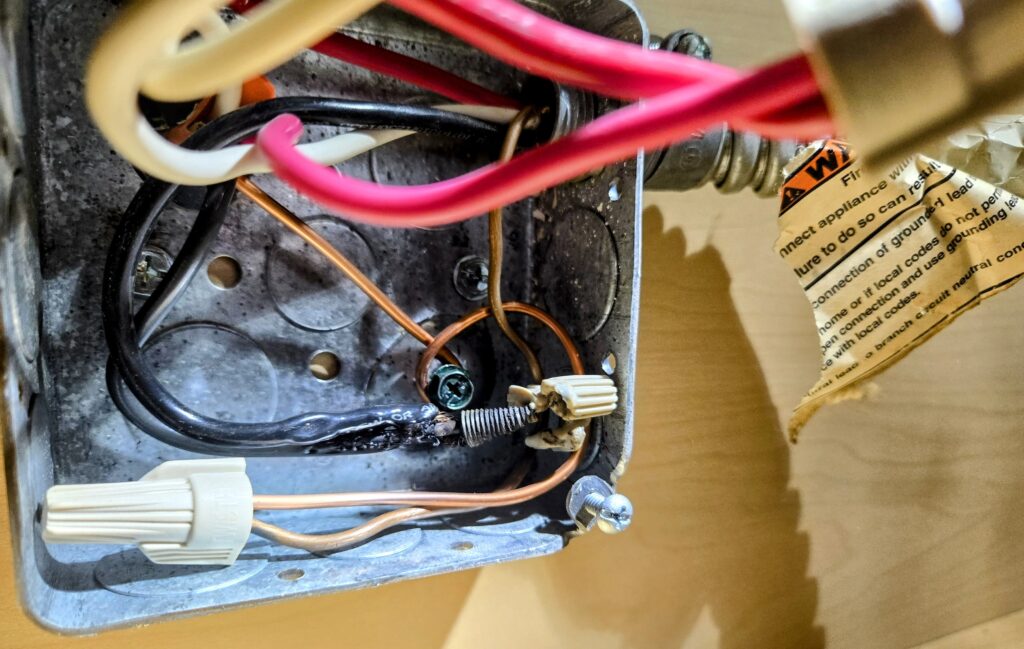
The Hidden Danger: Junction Box Failures
For built-in appliances like Wall Ovens and Dishwashers, the connection is hidden inside a metal junction box. We frequently encounter:
- Incorrect Wire Connectors: Using wire nuts not rated for high-amperage loads.
- Poor Splicing: Loose wire twists that create “hot spots” behind your cabinetry.
👀 Early Warning Signs for Homeowners
Keep an eye (and nose) out for these red flags after a new installation:
- The “Fishy” Smell: Overheating electrical insulation often smells like burnt fish or ozone.
- Excessive Heat: The area near the cord connection or the wall plug feels hot to the touch.
- Intermittent Power: Your appliance shuts off or displays error codes during high-heat cycles.
⚠️ SAFETY WARNING
If you suspect an electrical issue, turn off the breaker immediately. Never inspect internal wiring while the appliance is energized. If you see signs of melting or burning, do not restore power until a professional has inspected the unit.
🛠 Are You a DIYer or Need Expert Advice?
We believe in empowering homeowners. If you are outside our service area or want a second opinion on your installation, join our community.
- Get Expert Tips: Our technicians review questions and provide guidance.
- Share Your Photos: Post a clear photo of your connection, and we’ll give you an expert “thumbs up” or “heads up”.
🔌 Recommended Parts for Safe Installation
Using the correct electrical components helps prevent overheating, connection failure, and potential fire hazards.
Dryer Power Cords
Range Power Cords
*Some of the links above are affiliate links. As an Amazon Associate, we earn from qualifying purchases.
Need Professional Help?
If you are in the Cornelius, NC area and notice warning signs, don’t wait for a total failure. Let our experts verify your installation and ensure your home is safe.
Contact Us
PowerON Appliance Repair
📞 980-781-9018
🌐 poweronappliancerepairs.com
Written by Radik Sibgatullin
Lead Technician, PowerON Appliance Repair